GLAUCOMA CARE MAPPING THE PATIENT JOURNEY AT SAHLGRENSKA
On behalf of VGR Innovationsplattformen, in collaboration with Ögonmottagning Mölndal at Sahlgrenska, I mapped the glaucoma patient journey from diagnosis to care. Interviews with patients, surgeons, doctors, opticians and nurses surfaced pain points and needs, and the study explored where self-monitoring could improve the patient experience and reduce waiting times.
“Höjda blickar och ny teknik”, handed to the innovation platform at Västra Götalandsregionen.
Ögonmottagning Mölndal is part of Sahlgrenska Universitetssjukhuset's eye care services, providing advanced surgical and medical treatment for patients across Västra Götaland. The clinic handles both specialised procedures and general eye care for local residents.
Over 6,000 patients waiting, and the clinic can see about a quarter of them.
6,000+
Glaucoma, often linked to high eye pressure, creates long waiting lists and puts strain on clinic staff working with limited resources. Around 100,000 people in Sweden are estimated to have glaucoma, and the number is expected to rise with an ageing population.
At Mölndal, more than 6,000 patients are waiting for care, and the clinic can currently accommodate roughly 25 % of the visits it should. There is a real risk that some patients lose their vision before they are seen. Resident physician Arman Enekvint is leading an innovation project to tackle these challenges and improve the glaucoma care experience.
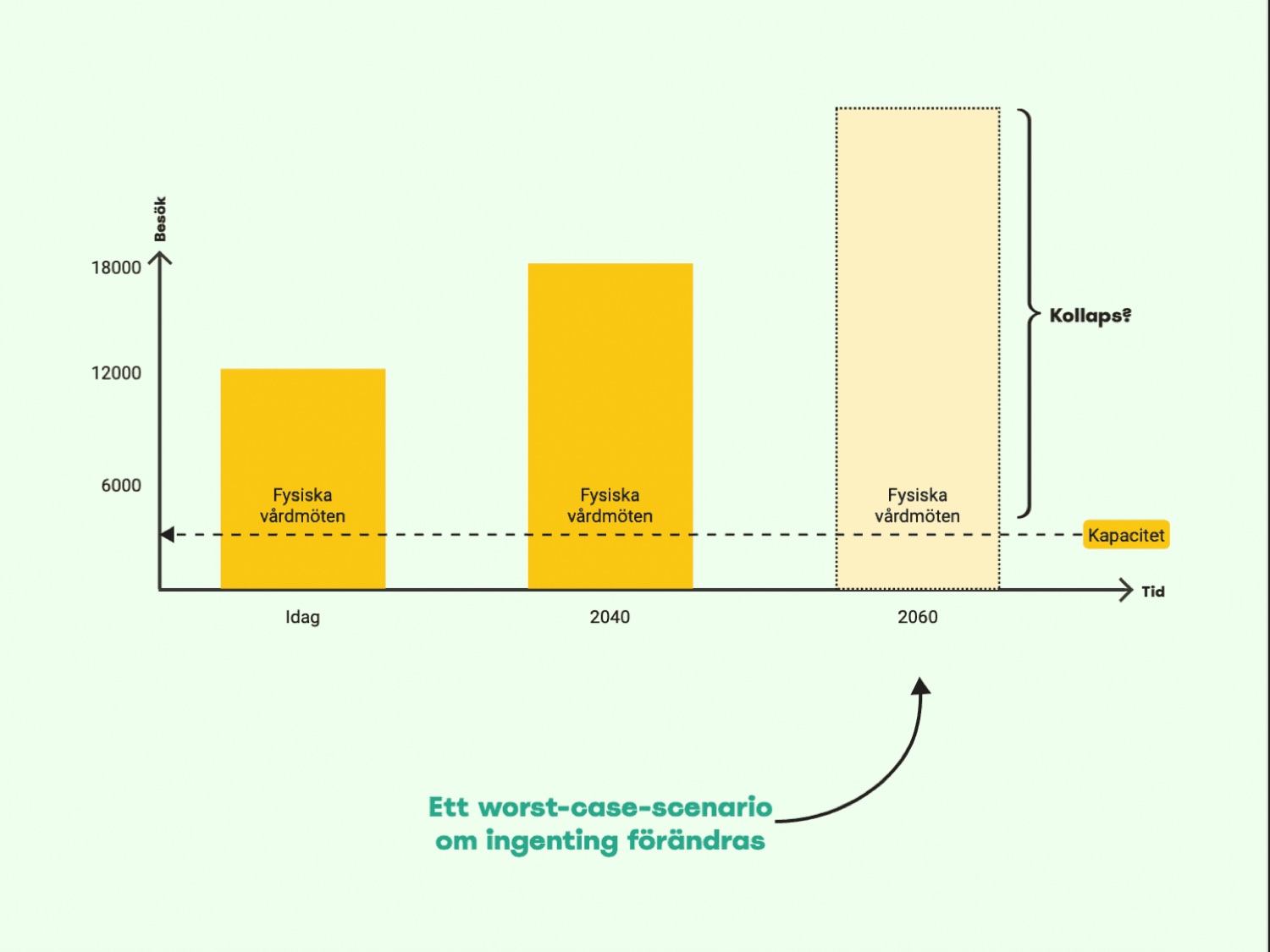
Today, 2040, and a 2060 worst case if nothing changes. The dashed line is what the clinic can actually do.
- Observed four patient visits to understand the consultation flow, interactions and examination routines.
- Interviewed staff and patients to uncover needs, expectations and operational pain points.
- Held two workshops with clinicians, nurses, opticians and medical staff.
- Reviewed international glaucoma research and portable measurement tools, so recommendations were grounded in evidence and current best practice.
- Conducted eight patient interviews and built three personas from the behavioural and emotional patterns that emerged.
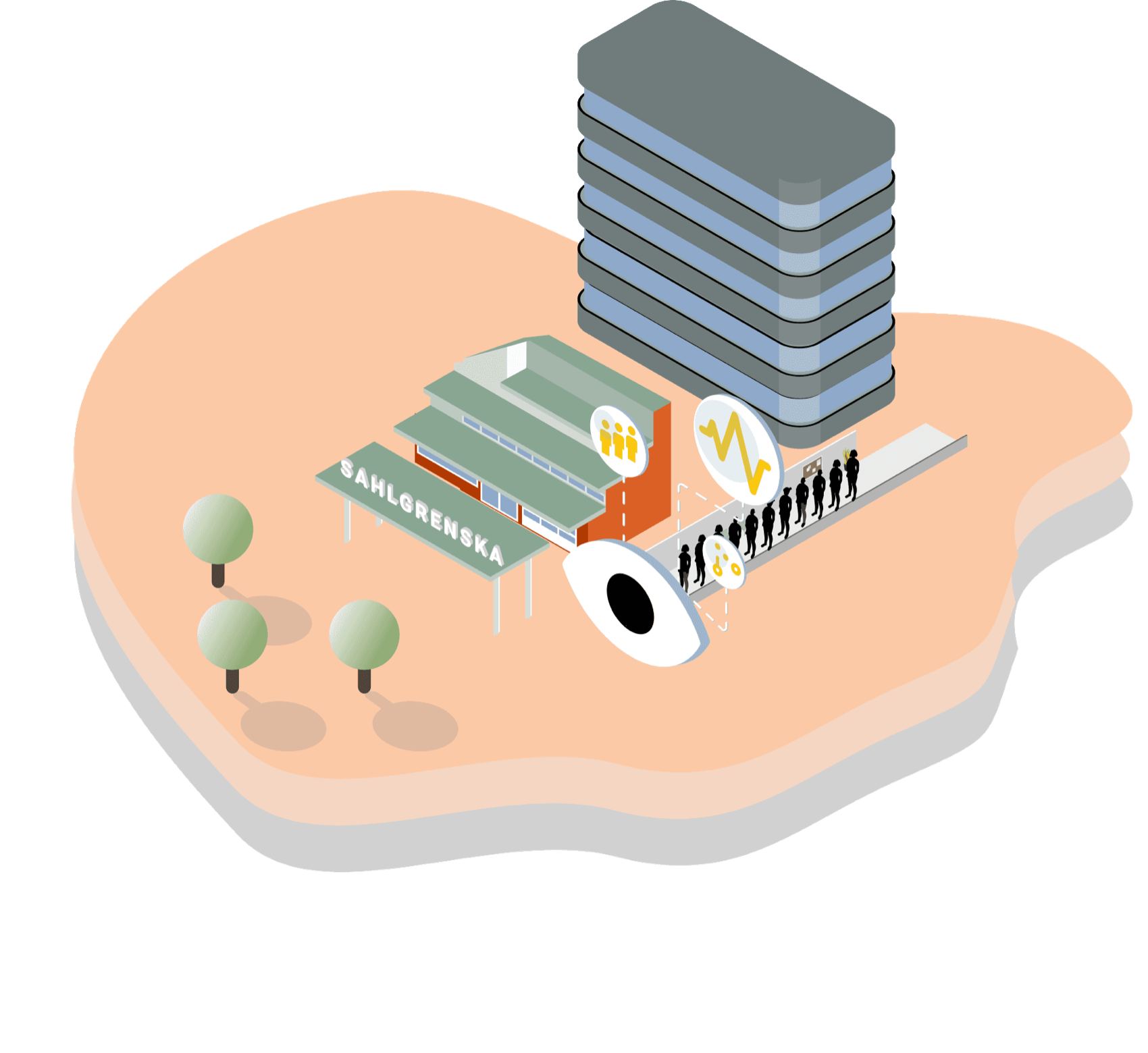
A queue between home and clinic, with the eye at the centre of it.
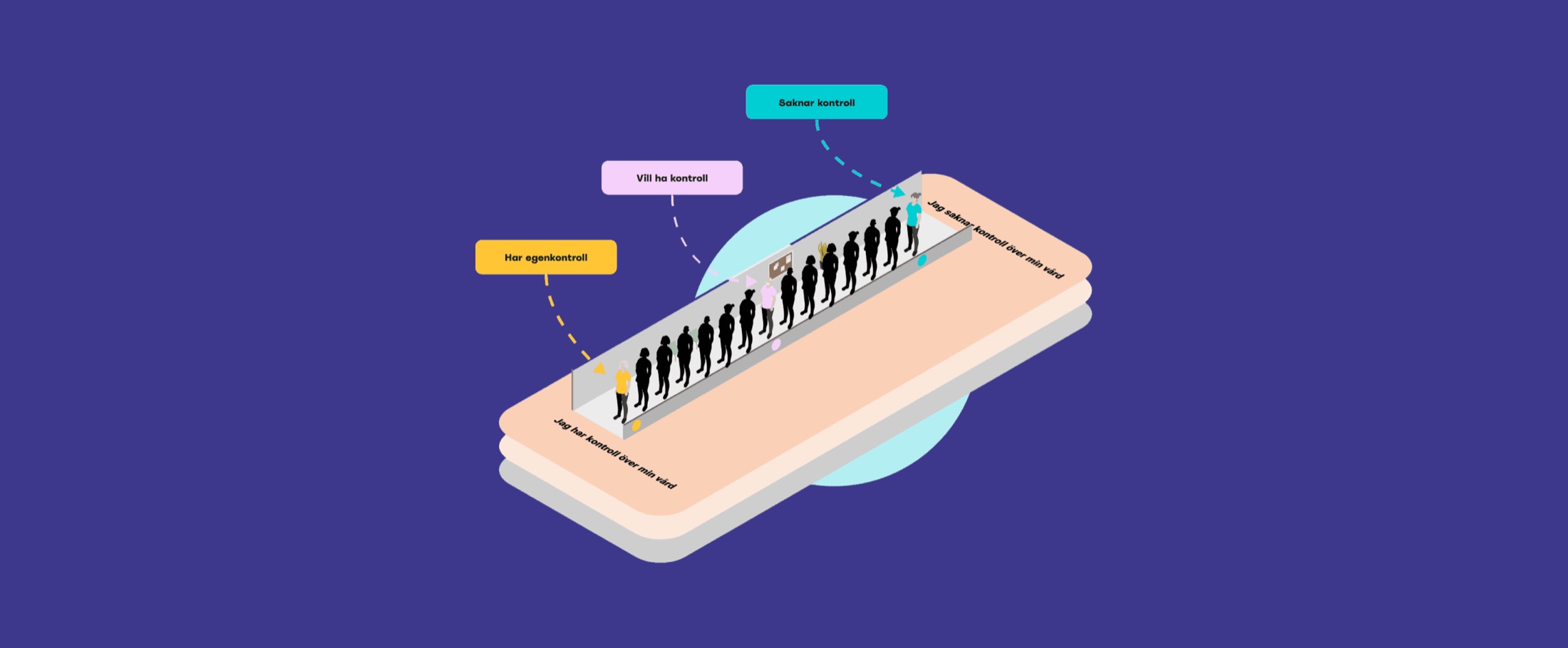
The axis that separated patients: from managing their own care to having no grip on it at all.
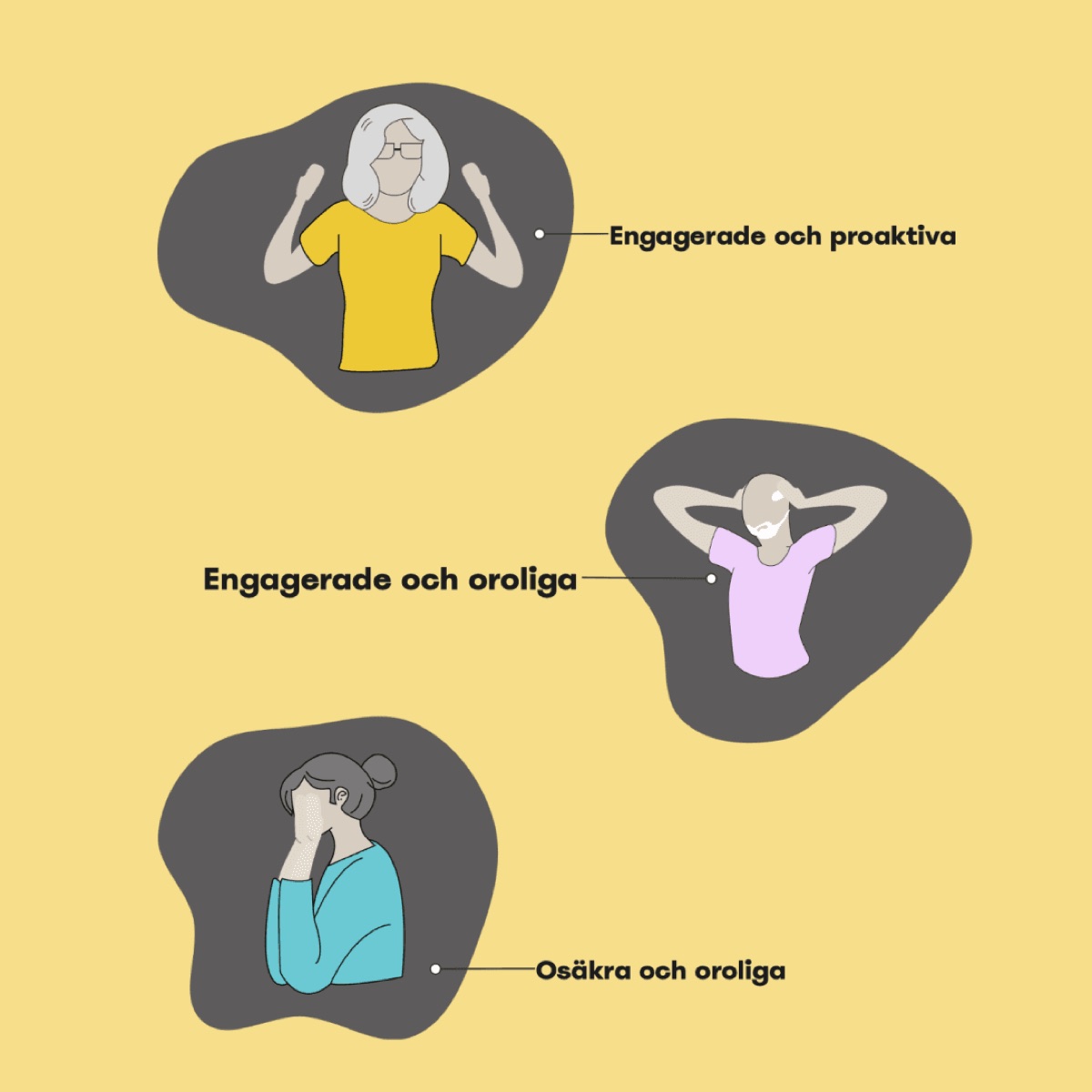
Engaged and proactive, engaged and worried, unsure and worried. Built from eight patient interviews.
Personas, journey maps and a foundation for the RFI.
The project produced a clear overview of the current glaucoma care experience, highlighting critical pain points for both patients and staff. We delivered personas, journey maps and key insights that helped the clinic see where improvements are needed most.
Together with the working group, two workshops explored self-monitoring as a supportive tool for the clinic. The material was compiled into a report submitted to the innovation platform at Västra Götalandsregionen; those findings now support the ongoing innovation work and form the foundation of the RFI application, guiding future decisions on reducing waiting times and improving patient care.
“They did a fantastic job researching and mapping out the entire customer journey and providing us with the necessary information to innovate.”